
Experience
You are an experienced Teaching Assistant and have led whole class learning without a teacher present.


 Course duration
3 to 5 months
 Award
Award
HLTA Status
 Delivery method
Online preparation
 Start dates
Monthly
Higher Level Teaching Assistant (HLTA) Status is a nationally recognised status that enables Teaching Assistants to develop their careers, including opportunities to take on greater responsibility in the classroom and beyond.
Higher Level Teaching Assistant (HLTA) Status is a nationally recognised status that enables Teaching Assistants to develop their careers, including opportunities to take on greater responsibility in the classroom and beyond. HLTAs work closely with teachers and other TAs to plan and prepare activities, support learning, support special and additional needs, cover planned absences and contribute to raising standards in schools.
Achieving HLTA Status demonstrates a Teaching Assistant’s ability to lead whole class learning and meet HLTA standards, which focus on expertise in supporting learning and pupil progress. The status is awarded through an HLTA assessment, which evaluates practical experience, knowledge and professional competencies.
Best Practice Network offers a structured preparation and assessment route designed to help Teaching Assistants gain HLTA Status through written tasks, a documentary evidence file and remote interviews.
.png)
You are an experienced Teaching Assistant and have led whole class learning without a teacher present.
Your headteacher supports your application and will complete the declaration form.
You can provide evidence of Level 2 English and maths or use one of our alternative routes if you cannot evidence this. *
* If you do not have Level 2 English and maths, or you cannot evidence your certificates, you may be able to complete BPN entry tests or use an employer exemption option. See the updated guidance in the FAQs section below.
Progress to HLTA Status through our streamlined assessment-only route, designed specifically for those who have completed the Level 5 Specialist Teaching Assistant Apprenticeship.
To achieve HLTA Status, you need to demonstrate the 33 HLTA Standards through your day to day practice in school. These standards are grouped into three core areas: Professional Attributes, Professional Knowledge and Understanding and Professional Skills.
This section focuses on how you work with pupils, colleagues, parents and carers.
This section focuses on what you need to know to support learning effectively.
This section focuses on what you do in practice to support, lead and advance learning.
The final 17 standards are the most practical. They are usually grouped into three areas so you can see what strong HLTA practice looks like day to day.
Using your knowledge and experience to help plan learning, prepare activities, support inclusion and choose suitable resources.
Tracking learners’ responses and progress, adapting support and contributing to assessment and record keeping.
Promoting positive behaviour, advancing learning with individuals, groups and whole classes and helping keep learners safe.
The HLTA we deliver is not a Level 4 qualification however, it has historically been accepted as a status that aligns with Level 4 qualifications. This recognition reflects the advanced skills, responsibilities, and professional knowledge demonstrated by HLTAs, making the status a valuable and respected progression route for experienced teaching assistants.
Watch our short video to explore the legacy of HLTA Status, hear real case study experiences and see how becoming an HLTA can support your confidence, career progression and impact in school.
This is a great place to start if you are still deciding whether HLTA is right for you. It brings together the practical value of the status with real stories from school support staff who have taken that next step.
HLTA preparation is delivered through live tutor facilitated sessions, ongoing support, independent study and a structured assessment process. We offer monthly start dates to help you join when it suits your school calendar.
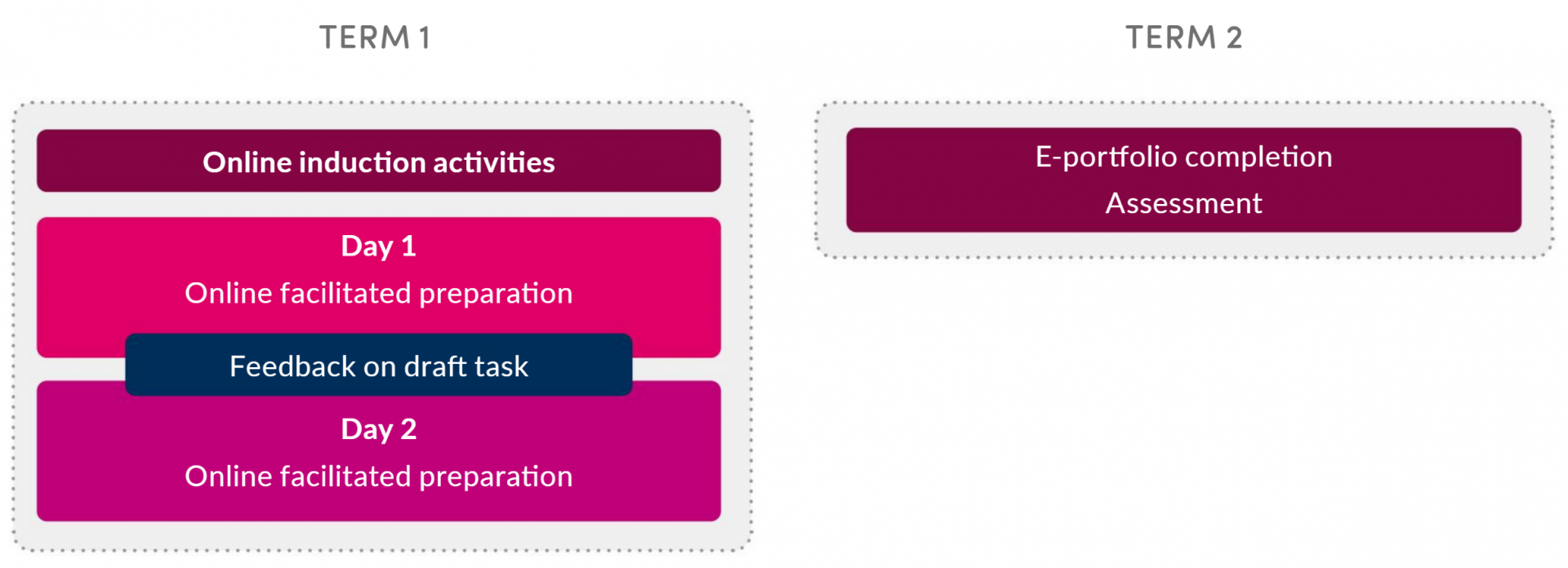
The full process typically takes 3 to 5 months.
Your HLTA team includes programme leads, facilitators, assessors and our support staff.


.jpg)

.jpg)
Best Practice Network is a leading provider of HLTA Status, with over 20 years of experience delivering high quality preparation and assessment that meets rigorous national standards.
The preparation course explains the HLTA Standards and the assessment process, including how to put together the documentary evidence file. Guidance is provided on completing written tasks and the set up of the 2 hour assessment appointment.
Between preparation sessions, you engage in online activities to check your understanding.
On the final session, the group returns to review progress and receive formative feedback on tasks written so far. Further guidance and support is provided for the assessment appointment.
Your assessor will contact you to arrange the assessment appointment. The assessment is typically 4 to 9 weeks after your final session. At least 10 days before the meeting, you email your final written tasks to the assessor and upload your documentary evidence file to a secure place. Assessment is carried out remotely.
The status is gained through an assessment of written tasks, an evidence file and interviews. You are not observed in class.
School networks or alliances with several support staff wishing to complete HLTA should contact us about bespoke training that can be arranged at a local level and delivered within their schools.
The cost of the HLTA preparation programme is £290 + VAT. This does not include the assessment element which is £450 per person. No VAT applies to the assessment fee.
To be accepted onto HLTA, prospective candidates must secure support from their headteacher to:
* If you do not hold Level 2 English and maths, or you cannot evidence your certificates, there are alternative options available. See the Requirement guidance section for entry tests and employer exemption.
Only applicants with a completed headteacher declaration form will be accepted and offered a place in a delivery group.
HLTA Standard 11 requires candidates to have achieved a nationally recognised qualification at Level 2 or above in English or literacy and maths or numeracy. You normally upload copies of certificates, or an acceptable awarding body statement of results, with your application.
Option 1: BPN Level 2 entry tests for HLTA
If passed successfully, this is treated as equivalent to meeting Standard 11 for HLTA. Please note the entry tests are not full qualifications that can be used as proof for other programmes.
Option 2: Employer exemption
Your employer can complete an exemption form confirming they do not require you to provide proof of Level 2 English and or maths. Important note: If you use this option, your HLTA certificate will state that Standard 11 for the relevant subject was not assessed as part of the award of the status.
For full details, use these documents or contact our CPD Admin team on hlta@bestpracticenet.co.uk.
A signed headteacher declaration form must be uploaded as part of your online application.