

At a glance

Includes expert delivery from Speech & Language Link

Awards:
Speech & Language Link Certification
Specialist Teaching Assistant Level 5

Course duration
18 Months

Online learning
and training events

Monthly coaching sessions

Free for learners - funded via Growth and Skills Levy
Price for this programme: £12,000 £0
This course is fully funded through the Growth and Skills Levy
Who is the Speech & Language Support Practitioner Apprenticeship for?
This programme is designed for teaching assistants and support staff who want to develop specialist expertise in speech, language and communication, and play a more impactful role in supporting pupils’ learning, participation and outcomes.
It is particularly suited to those working with pupils with speech, language and communication needs (SLCN), or pupils who struggle to understand, express themselves or engage in learning, and who want practical, evidence-informed strategies they can apply immediately in the classroom.
For schools and trusts, this programme strengthens in-house expertise in one of the most common and often unmet areas of need. By developing staff who can spot SLCN early, adapt classroom practice and work effectively with colleagues and external professionals, schools can improve access to the curriculum, support inclusion and drive better outcomes for pupils across the setting.
This apprenticeship is designed for:
- Teaching Assistants who want to better support pupils with SLCN and have a greater impact on learning in the classroom
- SEND Teaching Assistants looking to deepen their expertise and develop more effective, evidence-informed strategies to support pupils with additional needs
- Learning Support Assistants who want to build specialist knowledge and confidence in identifying and responding to communication barriers
- Higher Level Teaching Assistants (HLTAs) who want to strengthen their practice and take on a more specialist role within their school

Delivered in partnership with Speech & Language Link
This programme is delivered in partnership with Speech & Language Link, combining specialist expertise in speech and language with Best Practice Network’s experience in designing and delivering high-quality training and apprenticeships.
Speech &Language Link are recognised experts in supporting children and young people with speech, language and communication needs, bringing evidence-informed approaches and practical strategies that are used in schools every day. Their involvement ensures learners benefit from direct input from qualified speech and language therapists, grounded in real classroom application.
Best Practice Network brings a strong track record in delivering national professional development programmes, working closely with the Department for Education on initiatives including NPQs and apprenticeships. This ensures the programme is structured, rigorous and aligned with the needs of schools, while supporting learners to successfully achieve a recognised Level 5 qualification.
Together, this partnership gives learners the best of both: specialist clinical expertise alongside proven training delivery, resulting in a programme that is both academically robust and highly practical for schools.
Watch the Webinar: Everything you need to know about the Speech & Language Support Practitioner Apprenticeship.
Explore the new Speech & Language Support Practitioner Apprenticeship through our recent webinar. During the session, we are joined by Speech & Language Link, who share insight into the challenges schools are facing and the importance of building specialist expertise within school teams.
The webinar covers:
- What the apprenticeship is
- Who the programme is designed for
- How it supports pupils with SLCN
- Funding and eligibility guidance
- Live Q&A with the programme team
Why do schools need qualified Speech and Language Support Practitioners?
Speech, language and communication needs are now the most common type of SEND in England, with over 1 in 4 pupils on SEN support identified with SLCN. That means schools need staff with the right knowledge and practical expertise to spot needs early, put effective support in place and help pupils access learning with confidence.
Without trained staff, speech, language and communication needs can be missed or misunderstood, creating barriers to progress across the curriculum and affecting behaviour, wellbeing and participation in school life.
The Department for Education has already recognised the importance of this area through national investment in early identification and intervention. At the same time, Ofsted expects schools to identify and address barriers to learning as part of inclusive practice. For schools, that creates a clear need for specialist expertise in this area.
Our Speech and Language Support Practitioner Apprenticeship helps schools build that expertise from within. It develops confident, qualified practitioners who can support pupils with speech, language and communication needs day to day, apply practical strategies in school and strengthen inclusive practice across the setting.
Rather than relying only on external input, schools can use the apprenticeship to grow in-house capability, giving pupils earlier support, helping staff respond more effectively and building long-term capacity where it is needed most.

What will you learn?
You will develop specialist knowledge of speech, language and communication and learn how to apply it with confidence in the classroom, helping pupils access learning, participate more fully and make stronger progress. Alongside this, you will build the wider skills of a Specialist Teaching Assistant, so you can support individual needs, work effectively with others and contribute to inclusive practice across your school.
Understanding speech, language and communication
- What constitutes speech, language and communication needs (SLCN)
- How communication skills develop and why they are critical for learning
- The prevalence and impact of SLCN in schools
- Common difficulties and diagnoses, and how they may present in the classroom
- How communication breakdowns occur and affect understanding and behaviour
Identifying need and responding effectively
- How to recognise signs of SLCN, including identifying “red flags”
- Understanding the link between communication, behaviour and engagement
- The role of the teaching assistant in observing, recording and raising concerns
- When and how to escalate concerns and work with others to support pupils
Practical strategies to support pupils
- How to support attention and listening skills
- Creating communication supportive classroom environments
- Adapting your communication to support understanding, including:
- slowing down language and giving processing time
- breaking down instructions
- modelling language and communication - Using visuals, prompts and structured approaches to support understanding and independence
- Supporting vocabulary development and helping pupils express themselves
Supporting learning, development and inclusion
- Child development and how speech, language and communication underpin learning
- Applying effective teaching strategies to support pupils with individual needs
- Removing barriers to learning through inclusive practice
- Supporting social, emotional and academic development through communication
Planning, assessment and improving outcomes
- Contributing to planning and adapting support for individual learners
- Using assessment to understand pupil needs and progress
- Monitoring impact and supporting improvements in learning outcomes
- Using a range of approaches to support pupils effectively over time
Working with others to support pupils
- Advocating for pupils and championing their needs
- Working effectively with teachers, SENCOs, families and external professionals
- Understanding the importance of partnership working in supporting communication needs
- Contributing to inclusive practice across the school
How is the Speech & Language Support Practitioner apprenticeship delivered?
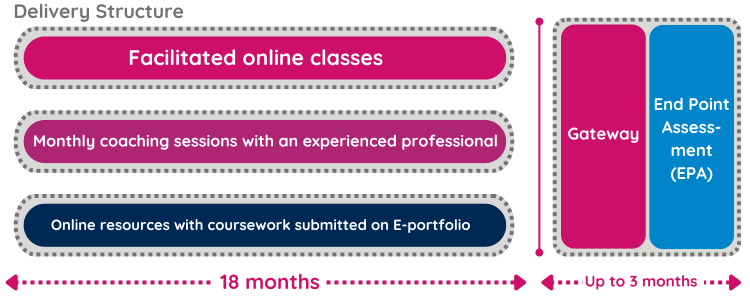
The apprenticeship is designed to fit around learners’ existing roles, allowing them to develop specialist skills and knowledge while applying their learning directly in their day to day work.
- Facilitated online sessions
Regular virtual classroom sessions support learners to develop the knowledge, skills and behaviours required for the role, with opportunities to reflect on learning and its impact in practice. - Monthly coaching with an experienced practitioner
Learners receive ongoing support from an experienced practitioner, helping them apply their learning in the workplace, review progress and develop confidence in their specialist role. - Online learning and portfolio development
Learners access structured online resources and complete activities throughout the programme, building a portfolio of evidence that demonstrates their impact in supporting pupils.
Assessment
Gateway
Gateway is the final stage of the apprenticeship before assessment, where the employer and training provider confirm that the learner has developed the required knowledge, skills and behaviours and is ready to move forward to End Point Assessment.
End Point Assessment (EPA)
EPA is the final assessment of the apprenticeship and includes:
- Observation with questions, where the learner is assessed in their real working environment
- Professional discussion, supported by a portfolio of evidence built throughout the programme
The outcome of the EPA determines the final grade of pass, merit or distinction.
Other programmes you may be interested in: