

Developing coaching skills changed the way I lead: Debbie's Apprenticeship journey
_1000.png "Developing coaching skills changed the way I lead: Debbie's Apprenticeship journey")
Developing coaching skills changed the way I lead: Debbie's Apprenticeship journey
Working as a senior leader, Debbie was used to supporting colleagues and guiding them in the right direction, however she felt something was missing. After previously considering starting a coaching qualification, it was when she received an email from Best Practice Network that she decided to make coaching a reality.
Since developing her coaching skills, Debbie has seen huge changes not only in how she supports colleagues but also within herself. In this case study, she discusses how coaching has been lifechanging for her and how it is as much a personal development journey for her as it is for those she coaches.
Can you tell us about your background and what led you to the coaching apprenticeship?
Before starting, I was working as a senior leader in education. I had considerable experience of supporting colleagues, developing staff and leading within the school, with a background in Human Resources, but I wanted to develop my skills in a more structured and professional approach to coaching.
I had always believed in supporting people to develop, but I wanted to move beyond simply giving advice and become much more skilled at helping people find their own solutions.
I was also interested in the potential impact coaching could have beyond individual coaching sessions. I wanted to understand how I could help develop a coaching culture within my school, so that coaching became part of how we lead and develop people.
What challenges were you facing prior to starting your coaching journey?
One of the challenges was finding the right balance between leading, supporting, mentoring and coaching colleagues.
As a senior leader, it can be very easy to step in and solve problems for people. I wanted to develop the skills to empower colleagues to think for themselves, take ownership and develop their own solutions.
I also wanted to find a sustainable way of supporting staff development in a busy school environment and ultimately create a culture where professional development was something everyone took responsibility for.
What have you enjoyed about coaching?
The thing I have enjoyed most has been seeing the real impact of coaching on individuals.
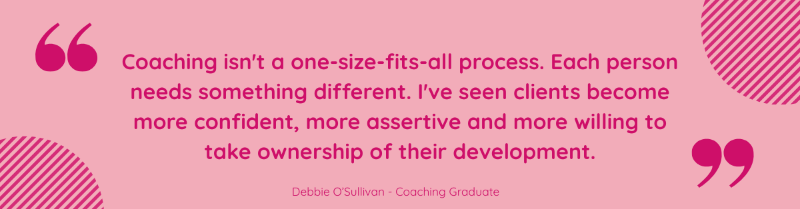
Working with three very different clients has shown me that coaching isn't a one-size-fits-all process. Each person needed something different. I've seen clients become more confident, more assertive and more willing to take ownership of their development.
Did you have any concerns before starting?
I was concerned about whether I would be able to balance the apprenticeship alongside the demands of a senior leadership role in a school.
I also wondered whether I would be able to make the transition from being someone who naturally helps and advises people to someone who can step back and genuinely coach them.
Those concerns turned out to be useful because becoming aware of them became part of my own development as a coach.
Has there been a standout moment for you since starting your coaching journey?
One of the most memorable experiences was with one of my clients who arrived shortly before a presentation extremely upset and convinced that she couldn't go through with it. She had been unwell, was crying and felt unable to present.
Rather than trying to force the planned coaching session, I adapted to what she needed in that moment. I listened, used a metaphor we had previously explored and helped her reconnect with why the presentation mattered and the knowledge she already had. She recovered sufficiently to give the presentation.
That experience really demonstrated to me that coaching is about the person in front of you, not about getting through your session plan. It gave me confidence in my ability to adapt and trust my coaching judgement. It also highlighted just how powerful coaching can be.
Did you complete the ILM Certificate in Effective Coaching?
Yes, the ILM qualification has been very important to me. It has encouraged me not only to develop my practical coaching skills but also to critically reflect on my practice, understand the theories behind coaching and evaluate the impact of what I am doing.
I have particularly valued the reflective element because it has made me much more conscious of my own behaviours and development as a coach.
How have you applied what you've learned in your day-to-day role?
I've become much more conscious of how I communicate with people. Rather than immediately offering an answer or solution, I am much more likely to ask a question, listen and give someone time to think. I've also become more aware of the difference between coaching, mentoring and simply supporting someone.
I have started to use coaching conversations informally with colleagues and leaders, and I am increasingly looking for opportunities to create ownership rather than dependency.
What positive changes have you seen in your own practice?
I am much more comfortable with silence, open questions, challenge and allowing clients to work things out for themselves.
The coaching clients have also demonstrated tangible progress. One client increased her leadership confidence to 10/10 and began taking greater ownership of delegation, business development and marketing. Another became more confident with public speaking and challenged her perfectionist thinking. A third became more confident and assertive in challenging workplace conversations.
These experiences have shown me that coaching can produce measurable changes in confidence and behaviour.
How has coaching changed you professionally or personally?
Professionally, it has changed the way I see my role as a leader. I have become much more aware that developing people doesn't always mean telling them what to do.
Personally, I think I have become more reflective and more comfortable with not having to immediately fix things. I've learned to listen more deeply and trust the other person's ability to find their own way forward.
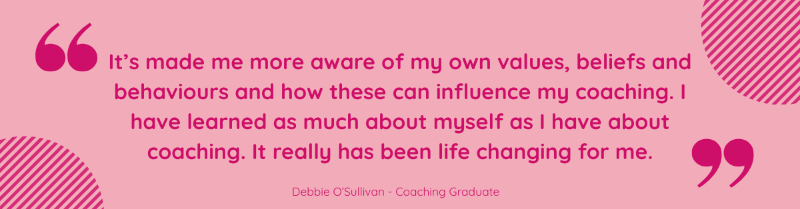
It has also made me more aware of my own values, beliefs and behaviours and how these can influence my coaching. I have learned as much about myself as I have about coaching. It really has been life changing for me.
Did you have any goals prior to starting your coaching training?
Yes. One of my main goals was to become a more skilled and confident coach and to develop a coaching approach that I could use within my school.
I feel I have made significant progress towards this. I have developed practical coaching experience and gained confidence in using a wide range of models and techniques.
However, I wouldn't say the goal is finished. My next step is to use what I have learned to introduce and embed coaching within my school, so that the benefits extend beyond my three individual coaching clients.
How does coaching make you feel?
I find coaching incredibly rewarding because you can see someone move from "I don't know what to do" to "I know what I'm going to do" without you having given them the answer.
It also makes me feel more reflective about my own leadership. Coaching has taught me that sometimes the most powerful thing I can do is stop talking, listen and give someone the space to think.
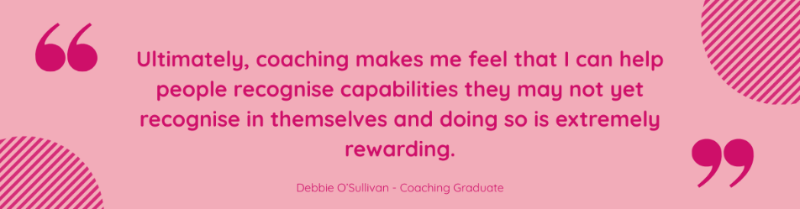
Ultimately, coaching makes me feel that I can help people recognise capabilities they may not yet recognise in themselves and doing so is extremely rewarding. That is why I now want to become a coaching ambassador and help bring that mindset into my wider school community. The skills required for coaching have enabled me to be a better leader, work more effectively (because my team is more self-sufficient) and is very humbling - particularly the level of trust that is established with the coachee.
What would you say to someone considering developing their coaching skills?
I would say go for it.
You don't need to arrive as an expert coach. In fact, being willing to recognise what you don't know is probably more important.
Be prepared to reflect on yourself as much as you reflect on your clients. The apprenticeship has challenged me to look at my own behaviours, assumptions and leadership style as well as developing my coaching skills.
Start your coaching journey today
It’s great to see what a positive impact coaching has had on our learners and the colleagues they support. If you would like to develop your coaching skills and become someone who drives meaningful improvement in your school, then the Coaching, Learning and Development Apprenticeship should be your next step. Find out more here.