

The SEND Suite: Improving Outcomes for Children and Young People
The SEND Suite: Improving Outcomes for Children and Young People
Written by: Amanda Marsden
Special Educational Needs Coordinator
Best Practice Network
Every child and young person deserves the opportunity to succeed, regardless of their background, abilities or additional needs. Creating environments where learners can thrive requires more than good intentions. It depends on educators having the expertise, confidence and practical strategies to recognise individual needs, remove barriers to learning and provide the right support at the right time.
When inclusive practice is embedded across an organisation, the impact can be seen in every aspect of a learner's journey, from engagement and wellbeing to achievement and future aspirations. This blog explores the characteristics of truly inclusive provision and the role that education professionals play in improving outcomes for all children and young people.
What is the ultimate measure of inclusion?
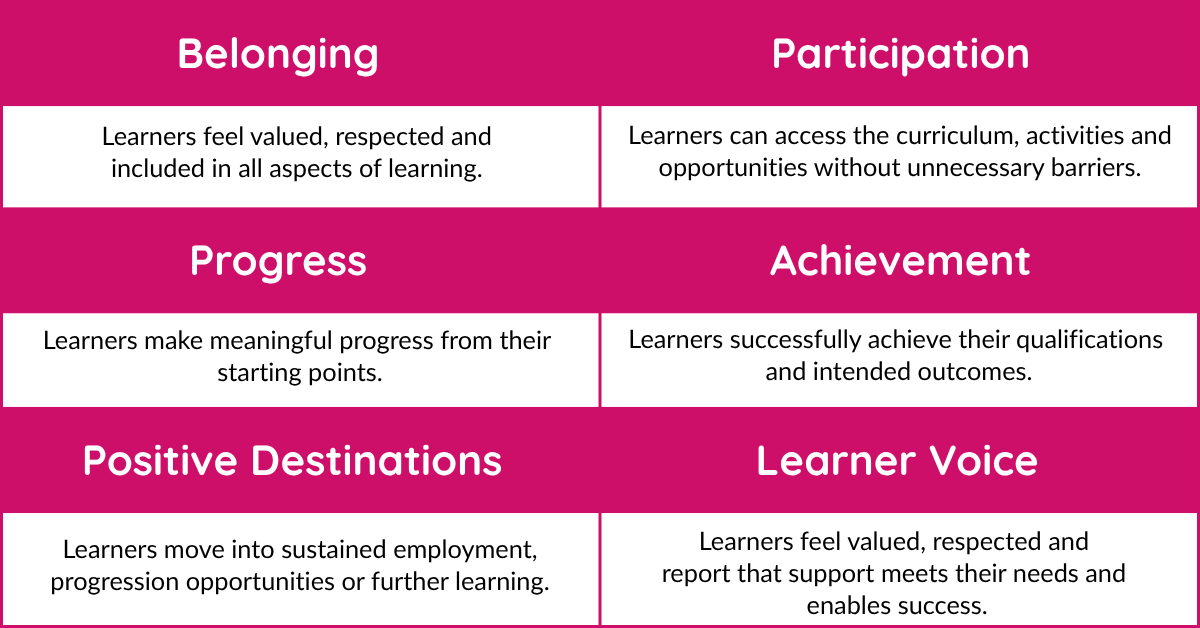
The ultimate measure of inclusion is whether every learner can participate, progress, achieve, and feel that they belong, regardless of their individual needs or differences.
An inclusive organisation can demonstrate:
Equipping Practitioners with the right skills
The true measure is whether they experience outcomes comparable to their peers and can fully engage in learning. When practitioners are equipped with the right knowledge, skills and behaviours, children and young people benefit from:
- Earlier identification of additional needs
- More effective classroom support
- Improved communication and language development
- Greater engagement and attendance
- Stronger emotional wellbeing
- Increased confidence and independence
- Improved academic achievement
- Better preparation for adulthood
These outcomes sit at the heart of both the Ofsted Education Inspection Framework and the SEND Improvement Plan, which emphasise the importance of helping children and young people develop the knowledge, skills and personal attributes needed for future success.
.png)
A culture of inclusion
For Best Practice Network, inclusion is not a function of compliance; it is a core organisational value. By investing in the development of teachers, teaching assistants, early years practitioners and educational leaders, the organisation contributes to a more inclusive education system in which children and young people with SEND can flourish.
In this way, inclusion becomes more than access to education. It becomes access to opportunity, achievement, employment, independence and lifelong success. The ultimate measure of inclusion is not the support provided, but the outcomes achieved. Inclusive practice is evidenced when learners with learning difficulties, disabilities and health conditions participate fully, remain engaged, achieve successfully and progress positively, with outcome gaps minimised across all learner groups.
The SEND Suite at Best Practice Network
To create lasting change, education professionals need access to high-quality training that strengthens inclusive practice and improves learner outcomes. Best Practice Network's SEND Suite provides a range of specialist programmes designed to equip practitioners with the knowledge, skills and confidence to support children and young people with SEND effectively. Explore the full range of programmes and discover how you can help build a more inclusive learning environment.