

Building a high quality SEND team
(1)_1000.png "Building a high quality SEND team")
Building a high quality SEND team
Written by: Rebecca Lacey, BA (Hons), PGCE, NPQH, MA (Inclusion)
SEN Strategic Lead (Apprenticeships) / Apprenticeship Tutor L7
Best Practice Network
Every child, regardless of their background, deserves an excellent education. Great teaching is one of the most important factors in improving outcomes for children and young people, especially those who require additional support.
With more than one in five pupils now receiving Special Educational Needs and Disabilities (SEND) support in the UK, meeting the needs of all learners is becoming increasingly complex. While SENCOs play a vital role in leading provision, creating an inclusive environment requires a whole-school approach.
SEND is everyone's responsibility
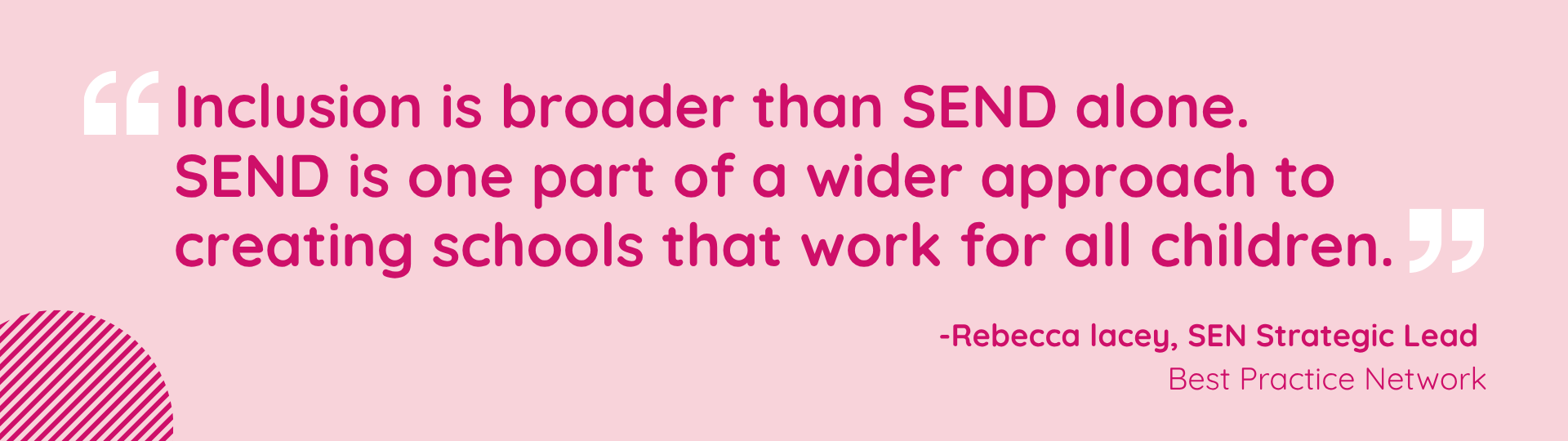
SEND provision is often associated with the SENCO, but inclusion happens every day, both inside and outside the classroom. The most effective schools recognise that SEND expertise should be distributed across the workforce rather than concentrated in a single role. SENCOs, teachers, teaching assistants and pastoral staff all have a responsibility to identify needs, remove barriers to learning and provide pupils with the tools they need to achieve their potential.
When staff across a school have the confidence and knowledge to support diverse learning needs, pupils benefit from:
- More inclusive classroom experiences
- Earlier identification of additional needs and support
- Consistent support throughout the school day
- Improved attendance, wellbeing and engagement
- Better academic outcomes
- Stronger relationships with families
What Does a Strong SEND Team look Like?
There is no single formula for building an effective SEND team. Every setting is different, but successful schools tend to share one characteristic: they invest in developing expertise across multiple roles.
Building SEND Leadership
At the heart of every successful SEND team is strong leadership.
The SENCO role is both strategic and operational, requiring influence across teaching, curriculum, behaviour, parental engagement and staff development. As schools face increasing demands, investing in SEND leadership has never been more important.
Programmes such as the NPQ for SENCOs and the Leader Apprenticeship with NPQ for SENCOs help current and aspiring SEND leaders develop the specialist knowledge, practical expertise and leadership skills needed to lead effective provision and create inclusive environments where all pupils can succeed.
Developing Inclusive Teachers
A teacher's ability to adapt learning, recognise emerging needs and create supportive classroom environments has a significant impact on pupil outcomes.
Specialist SEND teacher training helps aspiring teachers build these skills from the beginning of their careers, ensuring they enter the profession equipped to support learners with a wide range of additional needs.
Upskilling Teaching Assistants
Teaching assistants are often the members of staff who work most closely with pupils requiring SEND support. Investing in their professional development not only enhances learner support but also strengthens the quality of a school's overall SEND provision.
Opportunities for development include:
- Teaching Assistant Apprenticeship Level 3 (SEND Pathway)
- Specialist Teaching Assistant Apprenticeship Level 5
- Speech and Language Support Practitioner Apprenticeship Level 5
- Autism Support Practitioner Apprenticeship Level 5
Inclusion Beyond SEND: Strengthening Pastoral Support
Many barriers to learning extend beyond the classroom. Attendance, wellbeing, behaviour and family circumstances can all affect a pupil's ability to engage and succeed.
The Pastoral Support Practitioner Apprenticeship Level 4 helps school staff working in pastoral roles develop the skills needed to provide effective early intervention and coordinated support for children, young people and their families.
Learning from SEND Specialists
Building SEND expertise across a school requires training that is grounded in real-world practice and informed by specialists working directly within the sector.
At Best Practice Network, we work alongside Liberty Academy Trust and Speech & Language Link, leading SEND experts, to ensure our programmes reflect the latest evidence, practical strategies and approaches that make a positive difference in educational settings.
These partnerships help us develop programmes that support schools in meeting a wide range of needs, from autism and communication needs to inclusive classroom practice and wider school inclusion.
Inclusion in schools for all - including staff
We recognise that inclusion extends to the workforce itself and many education professionals have SEND needs of their own. Best Practice Network is committed to ensuring appropriate SEND support is available so that all learners can access training, develop professionally and achieve their potential.
Ready to Strengthen Your SEND Provision?
The schools making the greatest progress in inclusion are not relying on a SENCO to solve every challenge. Instead, they are building school-wide SEND expertise and creating a culture where every member of staff have the skills to contribute to pupil success.
By investing in leadership, teaching, pastoral support and specialist SEND practice, schools can build the confidence, knowledge and capability needed to support every learner more effectively.
By building SEND expertise across your school, you can create more inclusive classrooms, improve outcomes and ensure every pupil has the opportunity to thrive.
Find out how Best Practice Network can help your school build a stronger SEND team today.
For guidance and support, contact our team via email at enquiries@bestpracticenet.co.uk, call us on +44 (0) 117 920 9200 or book a discovery call at a time that suits you.